
Should You Renew Your CDP? A Guide for Marketers
TL;DR
Buyers increasingly use AI agents to research and purchase, and CDPs built for batch campaigns can't keep up. Gartner predicts 80% of net-new enterprise CDP deployments will be embedded in data platforms by 2030. Databricks CustomerLake (GA expected late 2026–early 2027) is that new model, and Snowplow supplies the live behavioral data it runs on. Before renewing your CDP, evaluate both.
If you own the customer data platform (CDP) on your marketing team, renewal season often has a way of arriving before the promised value does. Many of the marketers we speak to express frustration with their current CDPs. From personalization that reacts to last month's visit rather than the one happening this morning, to bills that climb with every new contact while the same questions stay unanswered. Then there's the AI plans that stall because the picture of the customer underneath is incomplete.
Those frustrations share a root cause, and it isn't a missing feature. The way people buy is changing underneath your stack. The CDP you're about to renew was built for the buyer of the last decade.
A renewal is the cheapest moment to change your mind. So before you sign, this post looks at why the current generation of CDPs fall short, and at the route Databricks has built for what comes next: CustomerLake, the agentic CDP inside Databricks, running on the real-time customer data Snowplow creates.
The problem: What's going wrong?
The marketing infrastructure that worked for the last decade is now mismatched with the buyers, channels, and speeds of the next one. That's Databricks' diagnosis and one that we at Snowplow agree with.
Gartner reads the market the same way, predicting that by 2030, 80% of net-new enterprise CDP deployments will be embedded in or composable with data platforms rather than stand-alone.
Databricks illustrated this issue with a nice example of a customer who wants to book a flight. They send an agent to research routes, another to scan their inbox for loyalty offers, and compare prices, and a third to purchase. Previously, this journey would've taken weeks. Now it happens in milliseconds, across every channel at once.
This particular buyer sets three tests your current customer data platform was never built to pass.
Speed, because anything working in batch cycles has already missed the moment. Relevance, because agents filter ruthlessly, and a first name in the subject line or a segment of ten thousand people doesn't survive the cut. And context, because acting correctly in the moment requires a live picture of the customer, the business, and everything already tried.
Databricks refers to this as Golden Context. And it's the difference between emailing a delayed traveler a generic loyalty offer and fixing their trip.
Now let's run some of the common CDPs against those tests.
Treasure AI and mParticle were built as the go-between of the old stack. Both collect customer data with their own tags and SDKs, and that collection is real, but it was designed to feed their platform, not your company's. The customer profile lives in their environment, in their format, and your own data platform gets a copy at best.
Meanwhile browsers and ad blockers increasingly shut out the tags this model relies on, so a share of your visitors never makes it into the picture.
Both vendors are now retrofitting AI onto that base while reinventing themselves: mParticle through its merger with Rokt and Treasure AI as a self-described 'Agentic Experience Platform.' Renewing one of these CDPs means betting the next two or three years on those transitions paying off.
Hightouch is the closest of the three to CustomerLake. It works directly from the customer data your company already stores rather than keeping its own duplicate.
However, Hightouch still sits outside your data platform. And Databricks is blunt about what that now means. A CDP outside the data platform "will always be too slow and too incomplete for agents running in milliseconds."
Put the three side by side and the same gap appears in different clothes. Your customer picture is either locked inside a vendor's platform, missing the visitors its tags never saw, or sitting outside the platform where your company's AI will actually run. Whichever one you renew, nobody is handing your team what the agentic era runs on: a complete, live record of what customers are doing, inside your own data platform.
The solution: Move the CDP inside your data platform, and feed it real-time data
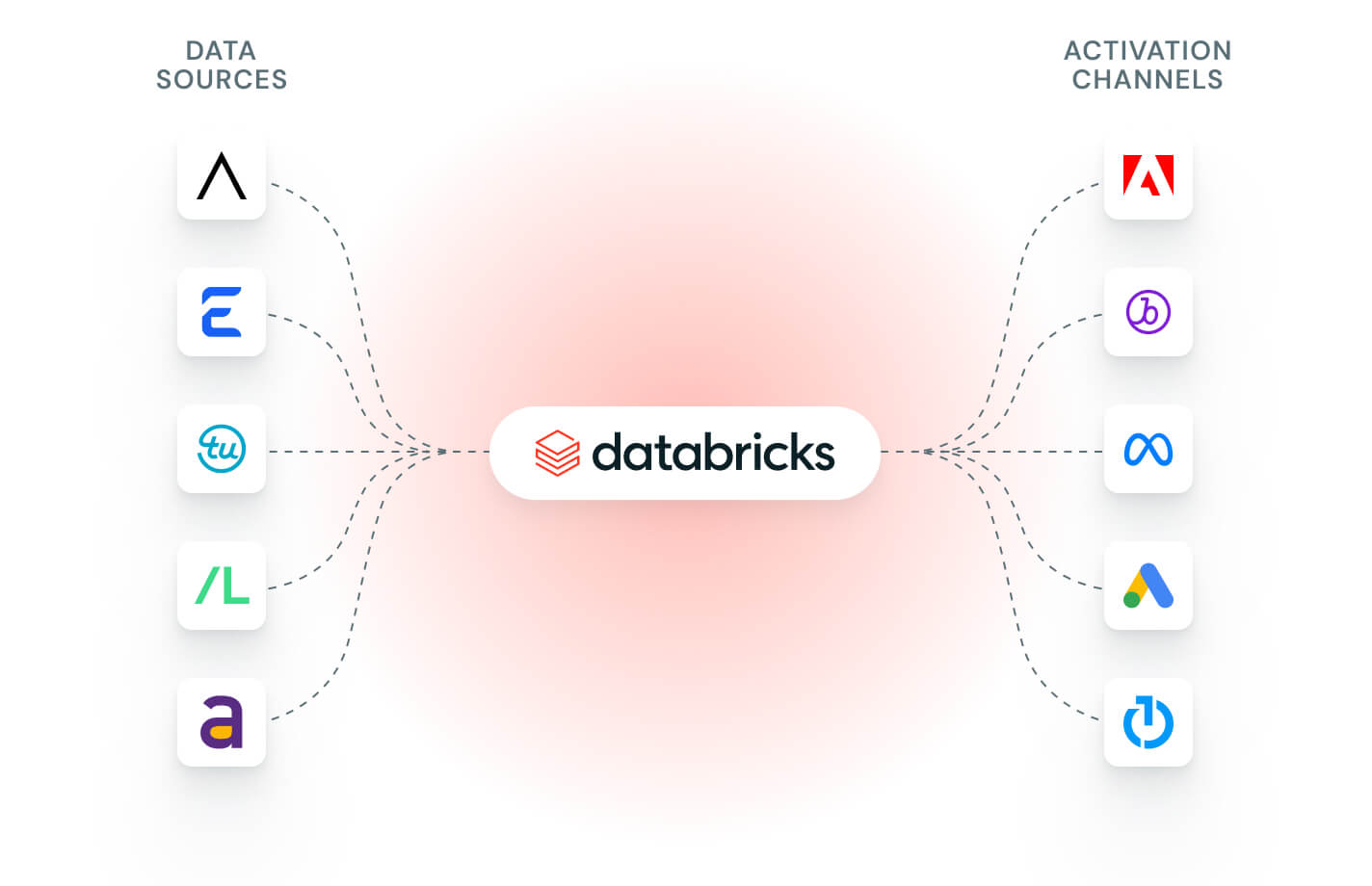
CustomerLake is Databricks' answer to the structural problem. So rather than having your CDP sitting between your data and channels, the CDP is built inside the platform where your customer data already lives.
For a marketing team, that changes two things day to day. Campaigns stop being batch sends and become what Databricks calls Infinity Campaigns: always-on loops that adjust message, timing, and channel as new customer signals arrive, personalized to one person rather than a segment of ten thousand. And because there's no duplicate of your customer sitting in another vendor's cloud, every campaign action runs under the same privacy rules and permissions your company already enforces on its data.
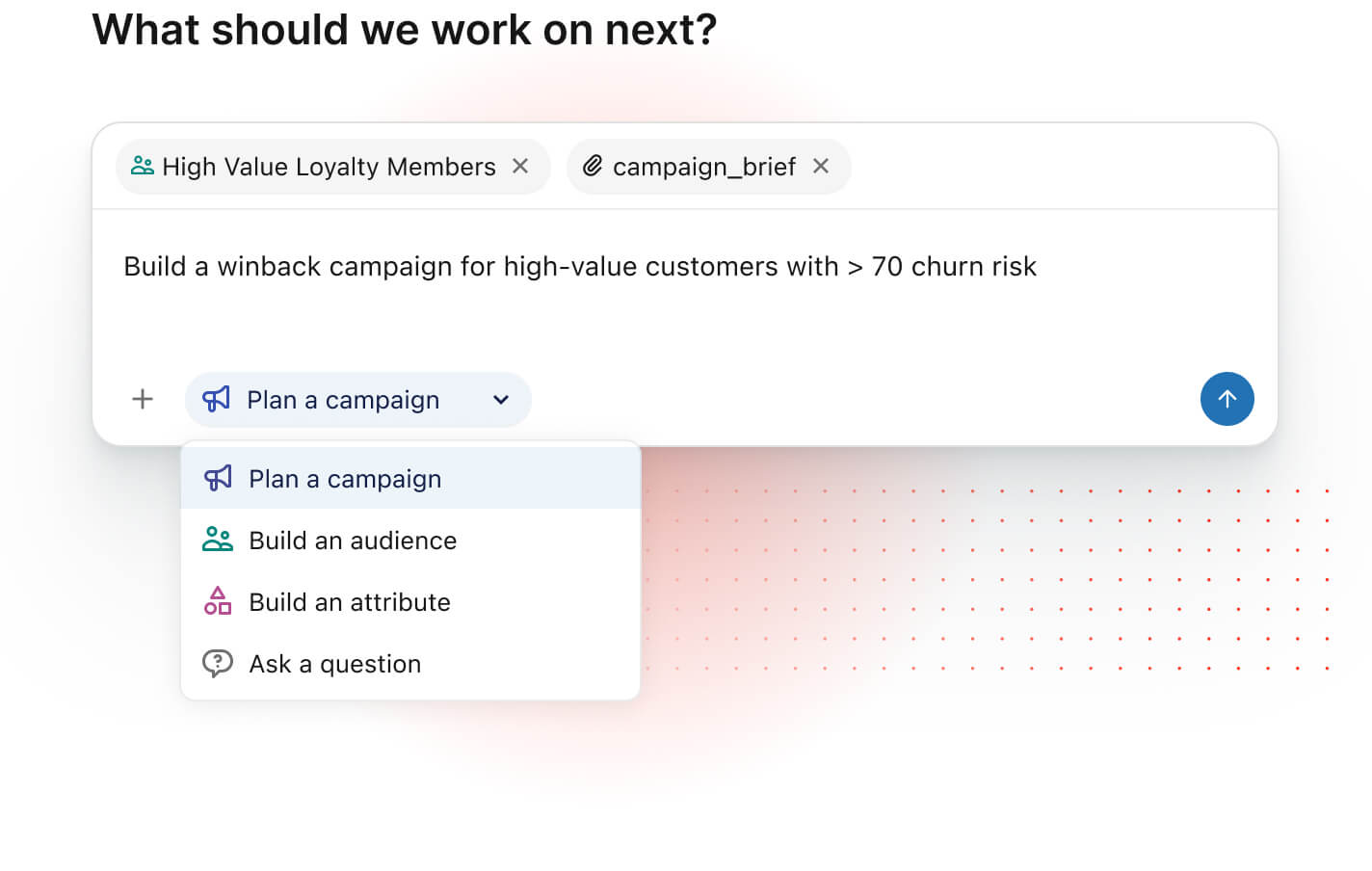
That leaves the input. CustomerLake builds its picture of each customer from everything already in Databricks such as transactions, engagement, product usage, and operational data. Most of that your company probably has.
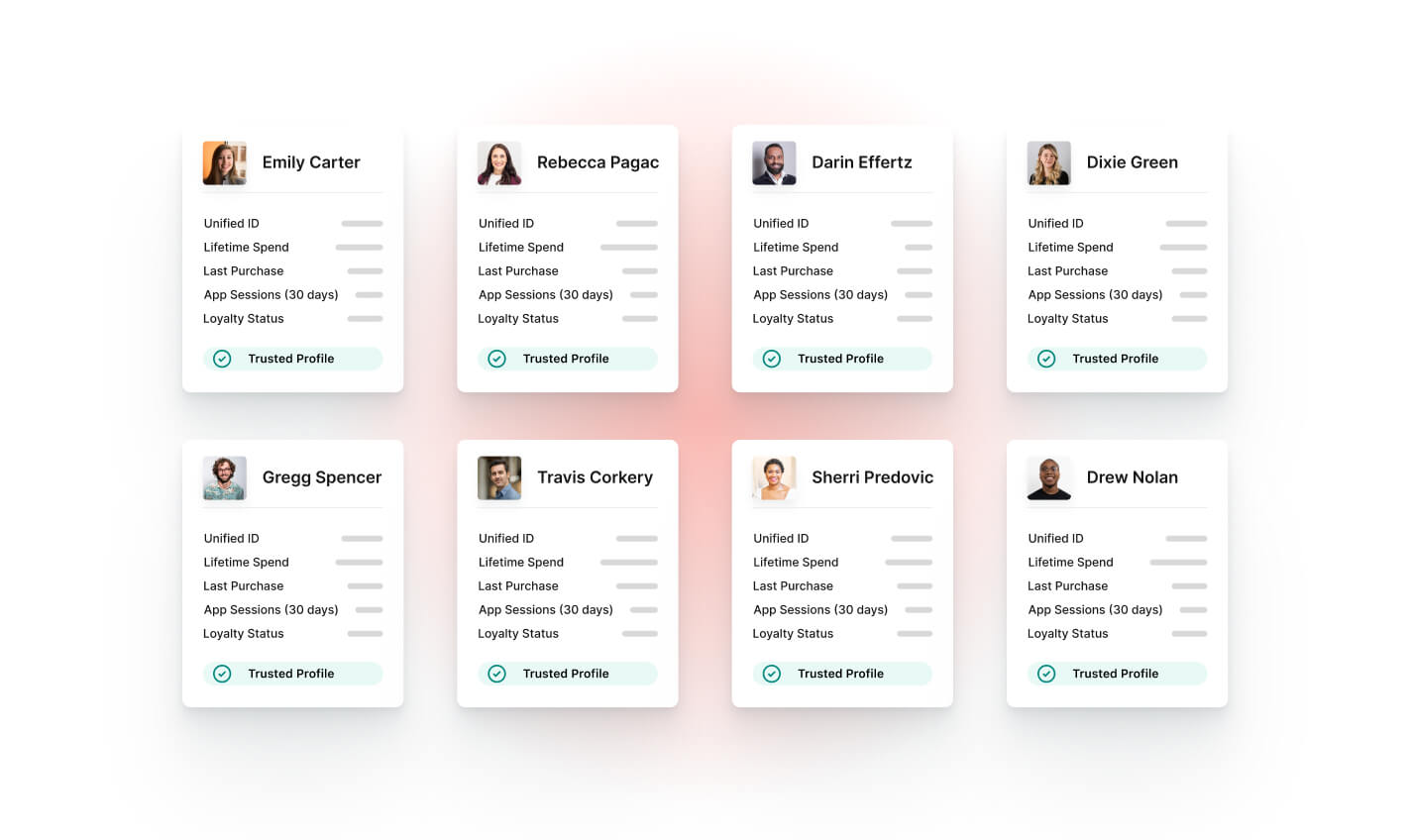
The piece that's rarely in good shape is customer behavioral data. Most companies track what customers do, but the data is collected for other tools' purposes. The data often lives in an analytics dashboard or a CDP vendor's cloud, and what reaches your own platform is a delayed copy, thinned out along the way and not validated at the source.
That matters because CustomerLake's agents can only act on what the record shows them. Feed them behavioral data that's hours old, incomplete, and inaccurate, and the always-on campaign quietly degrades back into what you had before: offers that react to yesterday's visit, moments missed while the data was in transit. You'd be paying for a millisecond decision engine and running it on last night's picture of the customer.
CustomerLake acts on the behavioral record; it doesn't create it. Creating it properly is the job Snowplow does.
Snowplow sits upstream from your data platform, not between it and your channels. It captures what your customers do across your website and apps, checks the data quality as it's captured, ties each action to the right customer with consent attached, and streams it straight into Databricks continuously, rather than in a nightly export or the next scheduled sync. So when a CustomerLake Campaign Agent decides what to act on, the record it reads can include the visit that's still in progress.
CustomerLake is brand new. It's in private preview at the moment, with Gartner expecting full general availability in late 2026 or early 2027.
Gartner's advice to enterprises is to schedule evaluations right now rather than wait.
That timing is workable rather than a reason to sit tight, because the foundation is what takes the time, and it's proven independently of CustomerLake.
Companies like Burberry already run Snowplow behavioral data in Databricks to power real-time personalization. Teams that build that foundation now, alongside the tools they already run, are the ones ready to switch on CustomerLake the day of their renewal, and its GA line up.
"A shopper who browses products on Burberry.com is telling us something about what she really wants. Thanks to Databricks Lakehouse Platform and Snowplow, we can build an AI-Ready Customer 360 so our client advisors have that information from the moment she walks into our store—and can deliver a personalized NextGen customer experience (CX)."
Benjamin Stephens, Senior Manager, Burberry
Three questions to ask before you sign
Whether you renew or switch, make the decision with clear eyes. As one industry analyst put it, marketers renewing any CDP contract in 2026 "are effectively making an infrastructure bet, whether they frame it that way or not."
So before you sign, ask three questions.
- Can my platform respond to what a customer is doing right now, or only to what they did last time?
- When my AI tools act, will they see the whole customer, inside my company's own platform?
- And if I renew, whose future am I betting on: my vendor's transition, or the platform my company is already building on?
If your current CDP doesn’t pass, you know where the gap is.
One Conversation to Have Before Your Renewal
This decision works best when marketing owns the outcome and your data team owns the platform.
Send this post to whoever runs your data platform, then book a Snowplow demo together to see what a live, accurate picture of your customers looks like in your own stack. If your data team prefers to get hands-on first, they can try Snowplow for free today.
FAQs
What is an agentic CDP?
An agentic CDP is a customer data platform built inside the data platform, designed for AI agents to run always-on, individually personalized campaigns rather than human-built batch sends.
When will Databricks CustomerLake be available?
CustomerLake is in private preview as of mid-2026; Gartner expects general availability in late 2026 or early 2027 and advises scheduling evaluations now.
What does Snowplow add to CustomerLake?
CustomerLake acts on customer behavioral data but doesn't collect it. Snowplow creates that data - validated, identity-resolved, consented - and streams it continuously into Databricks.